

Top Cheer Music Trends Defining Today's Competition Mixes
Cheer music doesn't sit still. The sound that wins on a competition floor evolves season to season — shaped by what choreographers are demanding, what coaches are responding to, and what producers are capable of building.
At Limelight Music Productions, we've been making custom cheer music since 2009 and have produced more than 5,000 mixes across 17 competition seasons. From that vantage point, here's what's actually moving the needle in cheer music right now — the production trends, identity choices, and creative directions defining today's most effective routines.
Theme-Driven Routines & Team Identity
The era of generic, anonymous cheer mixes is over. The most memorable routines are built around a clear concept — and the music carries that concept the moment the team takes the floor.
Themes show up in lots of forms: Greek mythology, royalty, space, fire, ice, predators, vintage glamour, dark fantasy. The strongest routines extend the theme through every layer of the music: voiceover characters, lyric content, instrumental textures, sound design choices, even the silences. A diamond-themed team doesn't just say "diamonds" once — the mix sparkles, glints, and crashes like diamonds throughout.
This is also where team identity gets baked in. Custom raps that name your gym, voiceovers that reference your team's story, chants that only your squad could perform — that level of personalization separates a memorable routine from one that fades the moment the next team takes the floor. It's a major reason we built our Headliner+ package and Centerstage X package around custom writing rather than off-the-shelf voiceover libraries.
The Rise of Fully Original Production
For most of cheer music's history, mixes have been built from licensed catalog music — songs you've heard, edited and arranged into a competition-ready track. That's still the foundation of the industry, and it works. But over the past few seasons, more elite programs have made the jump to fully original music: every song, every melody, every lyric composed from scratch for one team.
The appeal is simple. Original music is exclusive — no other team will perform to your sound. It's purpose-built — the energy, structure, and lyrics are designed around your routine rather than retrofitted to it. And it can't be matched, mimicked, or out-leveled by another program using the same source song.
The trade-off is cost and creative depth. Original production means more producer time, more writing, more iteration. It's why our flagship Centerstage X package exists as a separate tier — fully original cheer music isn't for every team or every budget, but for programs competing at Worlds, Summit, and top USASF events, it's increasingly the differentiator.
Vocal Production & Custom Voiceovers
Vocals carry more weight in today's mixes than they did a decade ago. The flat, single-voiceover-over-instrumental approach has given way to layered vocal arrangements — lead voices, backing harmonies, gang chants, processed effects, and team-specific raps stacked together to create texture and identity.
What's actually changing on this front:
- Vocal variety. More mixes feature multiple distinct voices — male and female leads, specialty rappers, kid-voice features for youth teams, character voices that recur throughout the mix.
- Gang vocals and call-and-response. Group vocal moments where the whole team appears to shout back to the lead create a sense of unity that solo voiceovers can't match.
- Custom raps and chants. Written specifically for the team — name-checking the gym, the team identity, the season's theme. One of the fastest ways to make a mix feel uniquely yours.
- Processed vocal effects as creative tools. Vocoder, harmonized stacks, telephone effects, crowd reverb — used intentionally to mark moments rather than pasted on as production gloss.
Energy Arc & Mix Structure
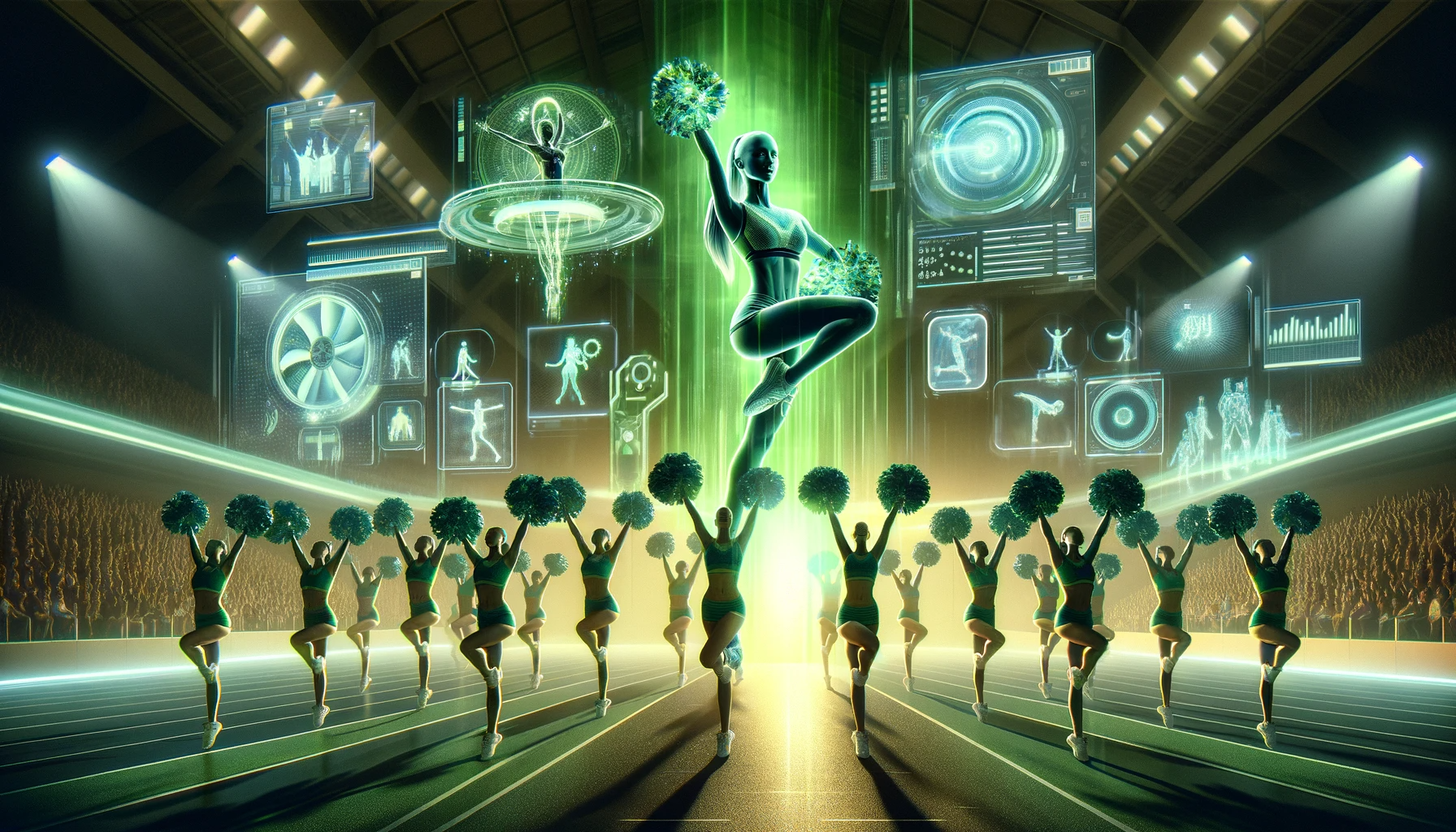
A great competition mix isn't a flat wall of energy — it's a deliberately structured journey. Today's strongest mixes plan their highs and lows around the routine's choreography, not the other way around.
The structure that's working: a confident, hook-driven opening that establishes identity in the first 8 counts; a build through the first stunt sequence; a controlled drop or breakdown that resets attention before pyramid; a final climax timed to the routine's peak skill or signature moment; and a clean, sharp exit that ends with intention rather than fading out.
Tempo variation matters too. The 145–150 BPM range remains the workhorse for most all-star routines, but mixes that vary tempo across sections — slower stunt builds, faster tumbling passes, half-time pyramid moments — read more dynamic to judges than mixes that lock into a single tempo for the full 2:30. Use our Cheer Music Calculator to map your tempo plan against the standard mix lengths.
Sound Design & Skill-Sync Moments

Sound effects aren't decoration — they're a competitive tool. The most polished mixes use sound design to draw the judge's eye to the moments that matter most.
Pyramid drops timed to a sub-bass impact. A tumbling pass scored with a riser and a hit. A stunt landing punctuated with a cinematic boom. Signature musical phrases that recur at key transitions so the routine feels composed rather than assembled.
Done well, sound design is invisible to the casual viewer but undeniable to a trained judge — the routine just feels tighter, more intentional, more finished. Done badly, it sounds like a movie trailer pasted onto a cheer mix. The line between the two is craft, and it's where experienced cheer music producers separate from generic music editors.
Genre Hybridization
A few years ago, cheer mixes tended to commit to a single feel — pop, hip-hop, EDM, or Latin. That's still common, but the trend is toward hybrid mixes that move fluidly between genres across the 2:30.
A modern mix might open with a trap-influenced hook, build through an anthemic pop section, drop into a hip-hop pyramid, and close with an EDM finale. The transitions are what sell it — when they're handled well, the genre shifts read as energy escalation rather than confusion.
This works because cheerleading itself is a hybrid sport: dance, gymnastics, stunting, and showmanship in one performance. Music that reflects that hybridity feels more native to the routine than music that locks into one mood and stays there.
AI's Role: Tool, Not Trend
AI in music production was the loudest conversation a couple of seasons back. The picture today is clearer and less dramatic.
AI is useful for specific tasks: stem separation, vocal isolation, mastering assistance, sample exploration. Producers who know how to use it can move faster on certain steps. But AI hasn't replaced the parts of cheer music production that actually matter — the creative direction, the team-specific writing, the relationship with coaches, the understanding of how a routine moves on the floor.
Coaches asking us about AI today aren't asking "can AI make our mix?" They're asking "is the music my team is performing to actually written by people who know cheer?" The answer at Limelight is yes — every Limelight mix is produced, mixed, and written by human producers who've spent careers in this industry. AI tools support the work; they don't replace it.
What This Means for Your Routine
You don't need to chase every trend — what matters is choosing the production direction that fits your team's level, identity, and goals.
For programs at the regional or state level, a polished licensed mix that captures your theme and energy is enough to win. For teams chasing nationals, custom voiceovers and team-specific writing start to matter. For elite programs at Worlds, Summit, or NCA, fully original production is increasingly the floor, not the ceiling.
The trends will keep moving. The teams that consistently sound great are the ones that work with producers who treat each mix as a creative project — not a template to fill in.
Looking for custom cheer music for your team? Limelight Music Productions has been crafting fully licensed, competition-ready mixes since 2009. Compare our packages on the Pricing page or head to our Book Now page to lock in your production slot.